
At VerdaTech, we’re driven by one purpose: to make buildings better. We believe every structure—regardless of size or budget—should be comfortable, efficient, economical, and built for long-term sustainability. Our team brings deep expertise in building science and energy efficiency to help clients achieve healthier, smarter, and more resilient buildings.
The right energy-efficiency solutions don’t just reduce costs—they enhance comfort, improve indoor air quality, and lower greenhouse-gas emissions. Our diverse capabilities and commitment to performance allow us to deliver meaningful results for homeowners, builders, and commercial clients.
Our philosophy is simple: provide exceptional service, offer honest and informed guidance, and always act in the best interest of our clients. Integrity, transparency, and technical excellence are at the core of everything we do. Explore how we can help you create a better-performing building.
Our Services
9.36 Energy Code Compliance
Section 9.36 of the Building Code sets the standard for energy-efficient residential construction across Canada. Whether you’re building a new home, completing a major renovation, or adding to an existing structure, compliance is mandatory, and choosing the right pathway can significantly impact cost, flexibility, and performance.
At VerdaTech, we provide complete 9.36 energy compliance modelling and guidance to help builders, developers, and homeowners meet code requirements efficiently and confidently.
Performance Compliance Path (Energy Modelling)
This path compares your design to a Code Reference house and rewards smarter design choices. Your proposed home complies if energy consumption is equal to or better than the modeled reference. We complete full-scope energy modelling and provide clear recommendations to enhance compliance and performance.
EnerGuide for New Homes Path (Performance + Label)
This option offers the same design flexibility as the Performance Path with the added value of an EnerGuide label. A blower door test is required, and your home must achieve a rating better than or equal to the Code Reference rating.
Prescriptive Compliance Path
This checklist-based approach ensures your design meets all minimum 9.36 requirements. It is straightforward and well-suited for additions or smaller Part 9 commercial/mixed-use projects where Performance Path is not available.
Trade-Off Path
Ideal for projects that need flexibility, this method allows design elements to be traded within the above-grade envelope. Calculations demonstrate that your proposed design performs as well as – or better than – the strict prescriptive requirements.
Contact us to find out which compliance path best fits your needs and jurisdiction
BC STEP Code Compliance
The BC Energy Step Code is a performance-based standard designed to help the province achieve net-zero energy-ready buildings by 2032. It sets clear energy-efficiency targets, organized into incremental “steps,” giving builders and designers flexibility in how they meet each level.
Compliance requires both energy modelling and on-site airtightness testing to verify that the design—and ultimately the finished building—meets the required performance targets. For Part 9 homes, working with a certified Energy Advisor or energy modeller is essential. Our team provides full STEP Code support, including:
- Energy modelling and plan review
- Targeted recommendations to reach the required Step
- Final airtightness testing and as-built verification
Fortis BC - New Home Program Rebate
FortisBC offers substantial incentives – $15,000 for homes built to Step Code 4 and $20,000 for Step Code 5 – for builders and developers constructing energy-efficient new homes within FortisBC’s gas or electric service areas. These rebates help offset the cost of building to higher performance levels while improving comfort, durability, and long-term operating efficiency.
To qualify, homes must be newly built and include select mechanical choices that support optimized energy performance. Projects using dual-fuel or all-electric systems must submit their rebate application within six months of completion or by December 31, 2027, whichever comes first.
The program also covers most Energy Advisor services:
- $800 rebate for builders
- Additional $500 for mid-construction blower-door testing
In many cases, this support covers the full scope of EA modelling, blower-door testing, and final documentation for occupancy.
Extra Design Support Rebates
FortisBC encourages integrated, performance-driven design through additional rebates at no cost to the builder:
- $1,000 – Integrated design & project consulting
- Up to $3,000 – Building envelope design (includes plan review, site reviews, and thermal/visual inspections)
- Up to $3,000 – Mechanical design (includes CSA F280, CSA F326, full mechanical design, commissioning, and air balancing)
These incentives make the FortisBC New Home Program one of the most comprehensive support packages available for high-performance residential construction.
Learn more here or visit fortisbc’s website for full program details.
EnerGuide Energy Assessment
An EnerGuide home energy assessment is a comprehensive, NRCan-certified evaluation of how efficiently a home uses energy. Conducted by our licensed Energy Advisors, the assessment provides clear, actionable insights to help homeowners reduce energy consumption, lower utility costs, and improve overall comfort and sustainability.
Our team uses standardized NRCan procedures, industry-approved tools, and non-destructive testing methods to deliver reliable, unbiased results.
What’s Included in an EnerGuide Assessment
Whole-Home Energy Evaluation
We complete a detailed review of the building envelope (walls, windows, doors, insulation), mechanical systems (heating, cooling, ventilation, domestic hot water), and overall energy-use characteristics. All work follows NRCan protocols and does not involve destructive investigation.
Energy Modelling (HOT2000)
Using NRCan’s HOT2000 software, we model the home’s estimated annual energy consumption, identify areas of heat and energy loss, and quantify potential savings. This modelling forms the foundation of the EnerGuide rating.
Blower Door Airtightness Test
A blower door test is performed to measure how much air leaks through the building envelope. The test depressurizes the home using a calibrated fan, allowing us to pinpoint leakage pathways.
Testing follows NRCan and CGSB standards. Because EnerGuide requires an “as-operated” test, guarded blower door testing is not permitted; as a result, shared or party walls cannot be isolated or evaluated with precision.
Personalized Upgrade Recommendations
Based on our findings, we provide homeowners with tailored recommendations—such as improving insulation, reducing air leakage, upgrading mechanical systems, or integrating renewable energy—to enhance comfort and reduce long-term energy costs.
Official EnerGuide Rating & Report
Your final report includes an official EnerGuide rating, presented in gigajoules (GJ) per year and normalized energy intensity (GJ/m² or GJ/ft²). These metrics give a clear, standardized measure of your home’s performance and make it easy to compare efficiency across different homes and designs.
For more information go to: NRCan EnerGuide Home Evaluations
HOT2000 Energy Modeling
HOT2000 is Canada’s leading residential energy simulation tool and the official calculation engine behind the EnerGuide Rating System and multiple energy-efficiency codes. We use HOT2000 to model the energy performance of new homes and renovations with precision, helping builders design smarter, comply with code requirements, and improve long-term performance.
Our experienced designers provide comprehensive HOT2000 modelling services, including:
- Accurate forecasting of energy consumption for new residential construction
- Comparative analysis of fuel types, including natural gas, propane, electricity, oil, and wood systems
- Pre-construction compliance checks for Part 9 energy regulations
- Calculation of thermal resistance and envelope performance, including thermal bridging
- Optimization of building designs for efficiency, cost-control, and material use
- Modelling of natural and pressure-driven air infiltration to support airtightness strategies
- Passive solar design assessments to improve overall building performance
- Ventilation planning to support healthy indoor air quality and occupant comfort
- Design-stage estimates for space heating, cooling, hot water, lighting, and appliance energy needs
Whether you are seeking EnerGuide certification, 9.36 compliance, or simply want a more efficient design, our team delivers accurate, actionable HOT2000 modelling that supports better buildings from day one.
RETScreen Modeling
RETScreen® International is one of the world’s leading tools for evaluating clean-energy and energy-efficiency projects. It provides a standardized, integrated platform to assess energy production, life-cycle costs, and greenhouse gas (GHG) reductions for a wide range of technologies and project types.
Our team uses RETScreen to support decision-making at every stage of a project—whether you’re planning a single building upgrade, a renewable-energy installation, or a full district-energy system.
What RETScreen Can Analyze
RETScreen modeling is highly flexible and can be applied to:
- Power generation, heating, and cooling systems
- Single buildings or portfolios of buildings
- Industrial processes
- Community-scale systems
- District heating and cooling networks
Fuel & Technology Versatility
RETScreen supports analysis of both renewable and conventional fuels—including natural gas, biomass, hydrogen, biodiesel, landfill gas, municipal waste, and more.
It can model a wide range of technologies such as:
- Boilers, heat pumps, furnaces, and geothermal systems
- Photovoltaics, wind turbines, hydro turbines, and fuel cells
- Reciprocating engines, gas turbines, combined-cycle systems
- Absorption chillers, compressors, and other thermal-energy equipment
This flexibility allows us to evaluate systems under various operating conditions (baseload, intermediate, or peak load) to determine true performance and cost impacts.
GHG Reduction & Financial Optimization
Using RETScreen, we help clients quantify potential GHG reductions and assess the financial performance of proposed projects. Our team evaluates sensitivity across key technical and financial variables to ensure your project is optimized for both energy efficiency and long-term cost savings.
Learn More about RETScreen
To learn more how RETScreen Expert can help, click here to see how it enables fast, data-driven evaluation of energy efficiency and renewable energy projects, reducing modelling time and supporting confident low-carbon decisions.
Infrared Thermography
Infrared thermography is a powerful, non-contact diagnostic technology that reveals what the eye can’t see. By capturing thermal energy emitted from surfaces, infrared imaging highlights temperature variations across walls, ceilings, mechanical systems, and building components. These thermal patterns can expose hidden issues such as heat loss, missing or low insulation, air leakage, moisture intrusion, and mechanical faults—long before they turn into costly problems.
Thermography has become an essential tool in modern building science, mechanical maintenance, and construction quality assurance, offering an accurate and non-destructive view into a building’s performance.
What Infrared Thermography Reveals
Using advanced FLIR infrared cameras, our technicians can visualize and measure surface temperatures to detect:
- Areas of missing or compromised insulation
- Heat loss through walls, ceilings, windows, and penetrations
- Air leakage pathways contributing to drafts and discomfort
- Moisture intrusion or condensation risks
- Mechanical anomalies such as overheating equipment or failing components
The assessment is completely non-invasive – no drilling, cutting, or disturbance to building materials is required.
Enhanced Accuracy with Blower Door Testing
We are one of the few companies that pair infrared thermography with blower door testing for superior diagnostic accuracy. Creating a controlled pressure difference inside the home enhances the visibility of air leakage pathways, allowing us to identify issues with far greater precision. Moisture meters and other diagnostic tools are used as needed to verify findings.
This combination approach provides the most reliable picture of your building’s true performance.
Best Time for Thermography
Optimal imaging conditions occur during colder months when indoor and outdoor temperature differences are greatest, producing crisp and informative thermal images. During warmer seasons, early morning or late evening appointments can still provide effective results.
Flexible Service Options
We offer infrared thermography as a standalone diagnostic service or as an enhancement to an EnerGuide evaluation. Pricing varies based on the scope of the investigation, building size, and whether blower door testing is included. Our team will recommend the most suitable package based on your needs.
HVAC Commissioning and Problem Solving
Modern building codes place increasing importance on properly commissioned heating and cooling systems – systems that perform as designed, operate efficiently, and deliver long-term comfort and reliability. Without proper commissioning, even the best-designed systems can fall short of expectations, leading to higher energy costs, reduced comfort, and premature equipment wear.
Because residential HVAC systems are assembled on site from many interconnected components, installation errors are common. Research consistently shows that a significant percentage of forced-air systems suffer from issues such as poorly designed duct layouts, improper equipment setup, incorrect airflow, and excessive duct leakage. These problems often remain hidden until they impact performance and cost.
Why Commissioning Matters
Commissioning is the detailed process of testing, measuring, and adjusting HVAC equipment to ensure it meets manufacturer specifications and the designer’s intent. Proper commissioning confirms that:
- Airflow is balanced and meets design requirements
- Equipment operates at optimal efficiency
- Duct systems are sealed, properly sized, and correctly located
- Controls and thermostats function as intended
- The system delivers comfort consistently across the home
A rigorous commissioning process is the most effective way to prevent performance issues and ensure the HVAC system operates exactly as intended.
Expert Diagnostics & Troubleshooting
Our HRAI-certified RASDT and RHDT technicians bring advanced diagnostic tools, field experience, and formal training to identify and correct system deficiencies. Whether you are dealing with comfort complaints, airflow imbalances, noise issues, cycling problems, or energy inefficiencies, our team can pinpoint the root cause and provide targeted solutions.
We assist with both new installations and existing systems, helping homeowners, builders, and HVAC contractors deliver reliable, code-compliant, and energy-efficient systems.
Gallery

Energuide Label Sample

Step Code Path

Thermography Sample
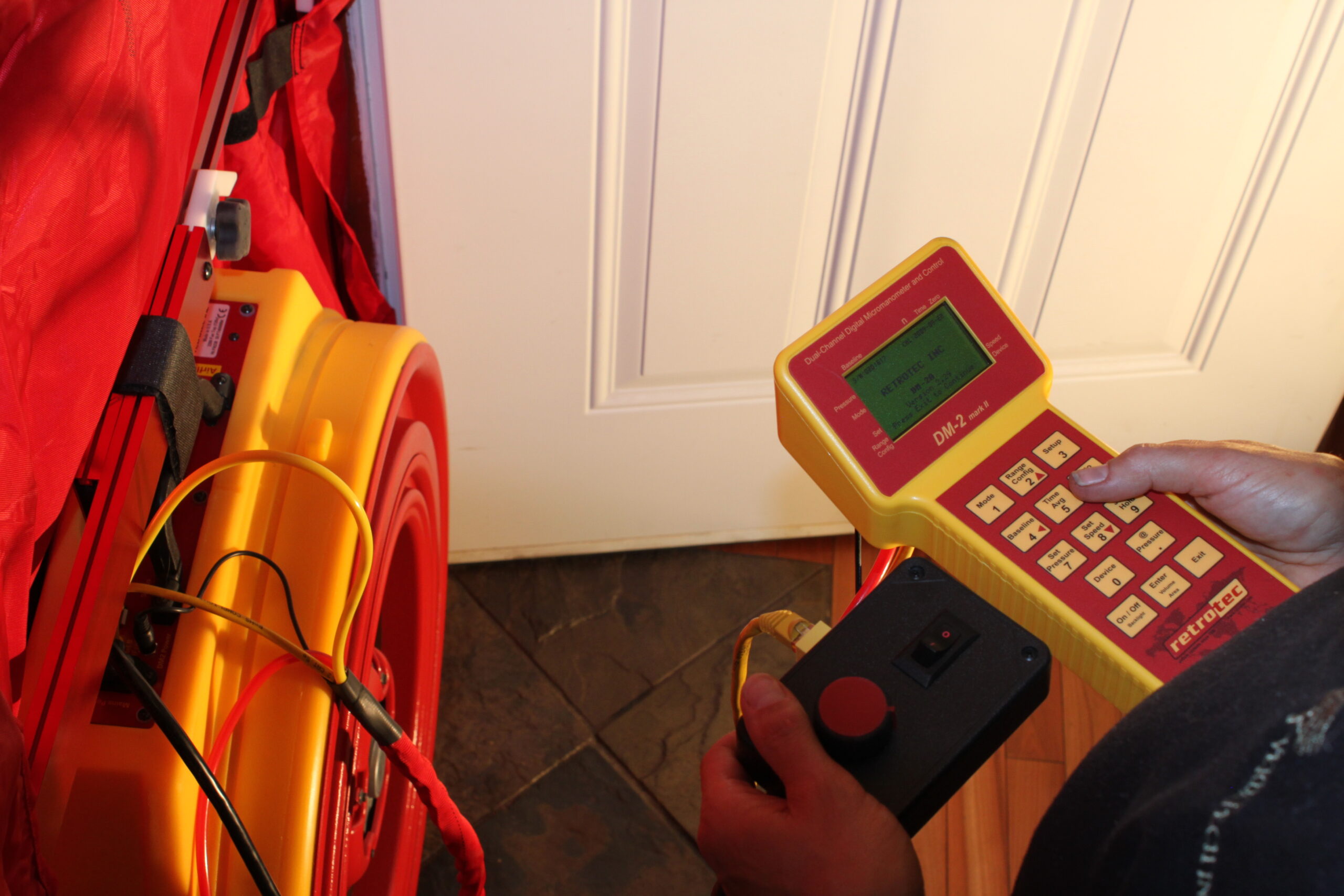
Blower Door
Contact Us
Getting in touch with us is easy, call us at one of our office numbers or fill out the form below:
Alberta
British Columbia
Ontario
Toronto and Area: 416-402-5230
Contact Form
Head Office Address
#514, 3208 8 Avenue, NE
Calgary, AB T2A 7V4
Office Hours: 8 am to 5 pm MT, Mon - Fri
VT Group - BC
201, 427 Fitzwilliam Street
Nanaimo, BC V9R 3A9
Office Hours: 8 am to 5 pm PT, Mon - Fri
Next Level Consulting - ON
531 Wellingtons St. W.
Aurora, ON L4G 6J7
Office Hours: 8 am to 5 pm ET, Mon - Fri